16 November, 2026
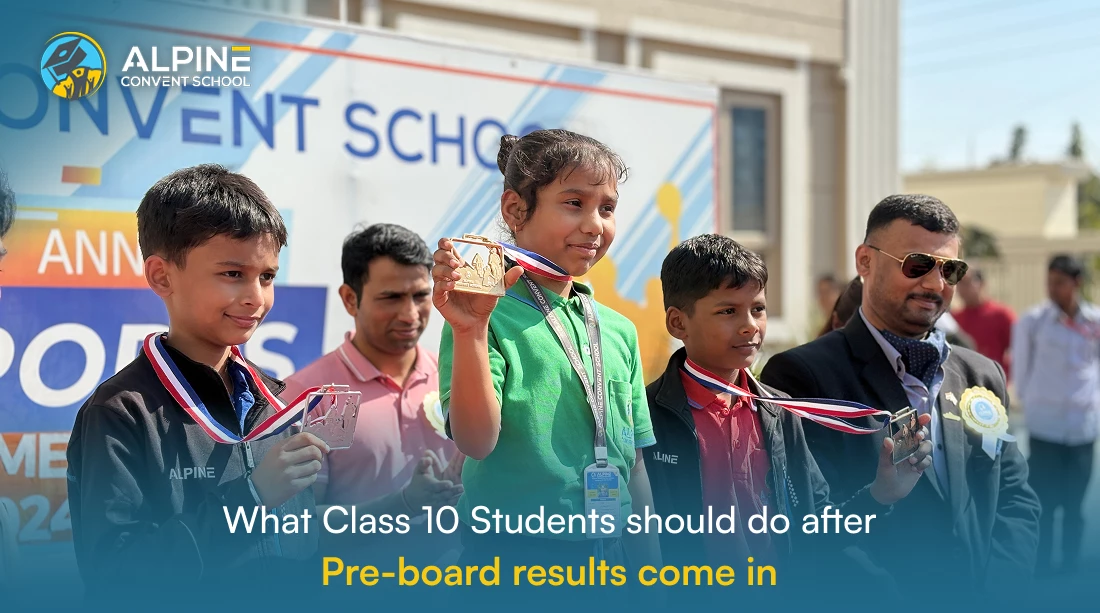
A disappointing pre-board score in December is not a prediction. It is a map. It shows exactly which chapters, question types, and habits will cost marks in February, while there is still enough time to fix them. The students who gain the most are usually the ones who study the paper, not just the marks.
Whether your child is at the best CBSE school in Gurgaon or a smaller neighbourhood school, the next few weeks follow the same logic: understand the gaps, plan the remaining time, practise under exam conditions, and protect sleep and confidence. Here is how to do each step well.
Total marks hide the useful information. Collect every answer sheet and go through them question by question.
Most lost marks fall into one of four groups:
Each group needs a different fix. Concept gaps need re-learning. Careless errors need checking routines. Time problems need timed practice. Presentation issues need model answers.
Teachers know what examiners look for. Ask each one two questions: “Which chapters should my child prioritise?” and “What is one habit that is costing marks?” Write the answers down and build the plan around them.
The exam structure has changed, and it matters for planning. CBSE's two-exam system for Class 10 continues in 2027. The official date sheet, released on 6 November 2026, schedules the first examination from 16 February to 9 March 2027.
First exam: All Class 10 students must appear for the compulsory first board examination.
Second exam: The second exam in May offers a chance to improve performance in up to three subjects.
The exact time left depends on your school’s pre-board dates and the final date sheet. A simple structure that works for many students:
These are general study tips that teachers commonly recommend:
Revision fails when a student is exhausted. Aim for consistent sleep, short breaks every 45 to 60 minutes, and phone-free study blocks.
If stress feels overwhelming, free help exists. For the 2026 exams, CBSE ran its annual free psycho-social counselling service for Class 10 and 12 examinees from 6 January to 1 June. The 24x7 toll-free IVRS helpline, 1800-11-8004, offered guidance in both Hindi and English. Check CBSE’s website for the 2027 schedule.
Pre-board season is also when families start thinking about streams and senior school. Many parents compare CBSE schools in Gurgaon at this point, looking at subject combinations, teacher support, and guidance on careers.
A top CBSE school in Gurgaon should help students with more than marks. On a visit, ask how the school supports students between pre-boards and boards, how it guides stream selection, and what learning support is available for students who need extra help.
At Alpine Convent School, the website lists learning support among its pastoral care areas and features career counselling as part of school life. If you are evaluating options for your child’s next stage, it is worth asking the school how these work in practice for Class 10 students.
Pre-board results are most useful when they lead to action: a clear analysis, a realistic timetable, timed practice and steady routines. Students who follow through often see real improvement by the board exams.
If you are thinking about the right school support for your child’s next steps, speak to the Alpine Convent School team. You can schedule a campus visit, review the admission process, or call +91 9999 700 821. You can also email enquiry@alpineconventschool.com. Campuses are in Sector 10, Sector 38, Sector 56, Sector 67, and Sushant Lok-1 (Sector 28), Gurugram.
Students should review each answer sheet and identify where they lost marks. Common reasons include weak concepts, careless mistakes, poor time management, and incomplete answers. Discussing these gaps with subject teachers helps create a focused revision plan.
There is no fixed number of study hours for every student. A balanced timetable with focused study sessions, short breaks, and regular revision works better than long, exhausting hours. Students should prioritise weak subjects while maintaining consistency across all subjects.
NCERT textbooks should be the foundation of Class 10 board exam preparation. Students should understand every chapter, practise textbook exercises, and revise important concepts. They can then use CBSE sample papers and marking schemes to improve exam readiness.
Students should create a weekly timetable based on their weaker subjects and remaining chapters. Practising full-length sample papers under timed conditions helps improve speed. Reviewing unfinished questions also helps identify where they need better time allocation.
Parents should compare subject combinations, experienced teachers, career counselling, and academic support for Classes 11 and 12. They should also understand how the school helps students choose suitable streams and adjust to senior secondary academic expectations.
24 November, 2026

17 October, 2026
16 October, 2026