09 September, 2026
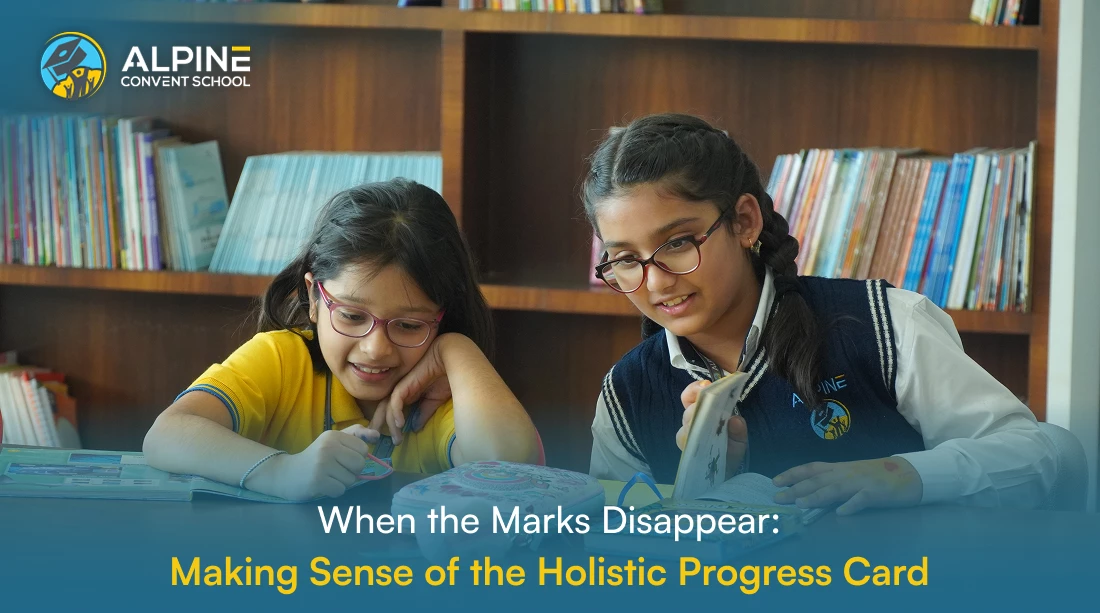
Imagine opening your child's end-of-term report card. You look for the total score. You search for percentages written in bold red or blue ink. Instead, you see descriptions, progress levels, and feedback on problem-solving skills. You find notes on emotional well-being, physical growth, and social interaction. The big red numbers are completely gone. This sudden shift can feel strange for many parents who grew up with standard grading systems. However, this change marks a massive leap forward in modern schooling, and it's one of the reasons more parents are choosing CBSE schools in Gurugram that have adopted this holistic approach to assessment. Understanding this new model helps parents support their children much better.
The Holistic Progress Card, or HPC, is a complete evaluation form introduced under the National Education Policy 2020. It moves away from once-a-year exam marks. Instead, it tracks a student's daily growth across many different areas of life. It does not just show what a child learned in class. It also shows how a child learns, thinks, and behaves around others.
According to guidelines from NCERT, assessment must shift from testing memory to building real competence. Alpine Convent School adopts this modern view to ensure every child receives personalized attention.
Prof. Indrani Bhaduri, Head of PARAKH at NCERT, highlighted this shift:
"The Holistic Progress Card is not just an assessment tool. It is a reflective mirror designed to show a child's complete developmental journey across all spheres."
For decades, regular tests only measured how well students could memorize textbooks. They ignored creativity, teamwork, and leadership. A child could score top marks in math but struggle with public speaking or managing stress.
Why are traditional report cards changing right now? Education systems across the globe are recognizing that single exam scores create extreme pressure without measuring true capability. Research published by UNESCO shows that descriptive, continuous feedback improves learning retention by up to 30 percent compared to traditional high-stakes testing.
Leading CBSE schools in Gurugram are replacing rigid marks with continuous skill mapping. Parents can now see continuous progress instead of waiting for final exam results. A forward-thinking CBSE school in Gurgaon understands that real success requires more than high test scores.
How do parents read a report card without numbers? The answer lies in understanding three main pillars of growth. The new progress card divides child development into distinct learning areas.
By tracking all three domains, the best CBSE school in Gurugram helps parents see where a child excels and where extra support is needed. At Alpine Convent School, teachers use these clear descriptors to create custom support plans for every student.
What role do children play in evaluating themselves? In traditional systems, assessment was purely one-sided. Teachers made all the judgments, and students simply received the final grade. The new holistic card completely changes this dynamic by adding student participation.
Progressive CBSE schools in Gurugram use these regular self-assessments to turn passive listeners into active learners. Choosing a top CBSE school in Gurgaon ensures your child builds critical self-reflection skills early in life.
The elimination of simple numerical marks helps remove unnecessary academic stress. Children no longer fear being compared to their peers based on a single score. Instead, they focus on self-improvement and steady skill development.
Top-quality CBSE schools in Gurugram empower students to learn without fear of judgment. Alpine Convent School remains dedicated to helping every child build a strong foundation for lifelong learning.
Yes, evaluations and assessments still take place, but they are no longer focused solely on end-of-term paper exams. Assessments happen continuously through class activities, hands-on projects, self-reflections, and practical assignments to measure real conceptual understanding instead of memory work.
Higher education boards and institutions are aligning their admission frameworks with the National Education Policy guidelines. The Holistic Progress Card translates learning achievements into clear, standardized performance descriptors that detail a student's core competencies and skill levels across all academic subjects.
Unlike traditional report cards that arrive once or twice a year, holistic tracking is an ongoing process. Parents receive regular descriptive feedback, teacher observations, and updates throughout the academic term, allowing for timely support at home rather than waiting for an end-of-year result.
Because the Holistic Progress Card breaks down learning into specific skill pillars (such as awareness, application, and problem-solving), teachers can pinpoint exact areas where a child needs support. This allows teachers and parents to create targeted support plans early on rather than waiting for a low test score at the end of the year.
Parents are active partners in the assessment process. The progress card includes a dedicated home feedback section where parents share observations regarding their child's habits, interests, emotional well-being, and daily routine at home, creating a complete 360-degree view of the child's overall development.
15 September, 2026


08 August, 2026