12 August, 2026
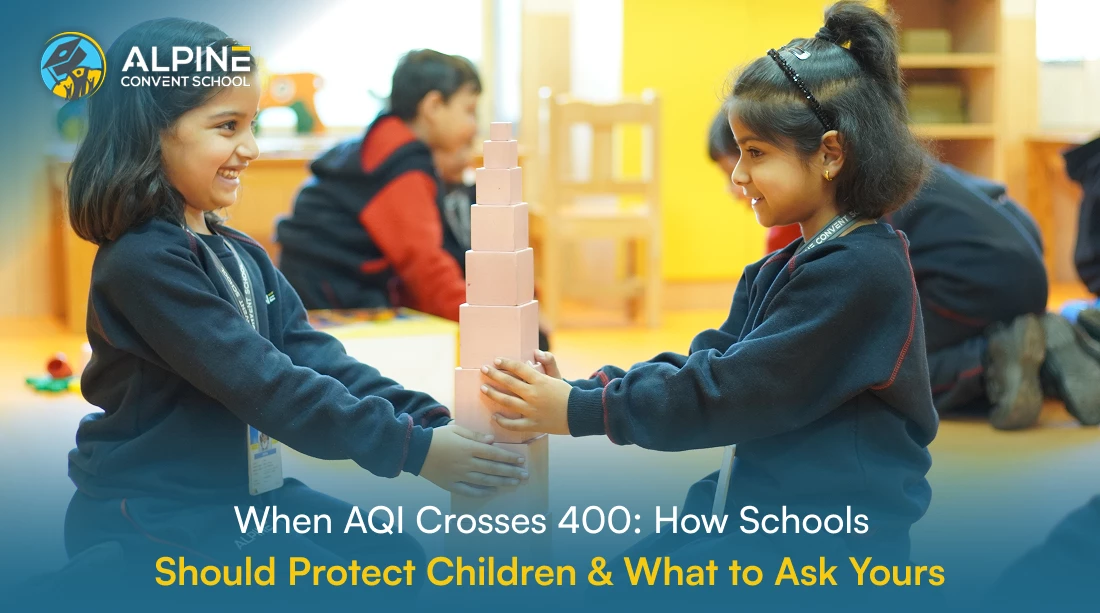
Winter brings cold morning air to Northern India. It also brings heavy smog. When the Air Quality Index passes 400, the air turns severe and dangerous. Children face the highest health risk on these high-pollution days because their bodies are still growing. They also spend many hours away from home at school. Parents worry about their safety during these toxic months. Every school, including the best CBSE school in Gurugram, must take strong steps to protect students from polluted air inside and outside the classroom.
What actually happens to a child's body when the Air Quality Index crosses 400?
Very small pollution particles float in the air. These tiny particles are called PM2.5. They are invisible to human eyes. When children breathe this air, PM2.5 travels deep into their lungs. It can even enter their bloodstream.
Children breathe faster than adults. Data from the World Health Organization shows that children breathe twice as much air per pound of body weight compared to adults. Their organs are still growing. High pollution exposure causes serious short-term and long-term harm.
A study by Harvard University revealed that breathing high PM2.5 levels can cut normal lung growth in young children by up to 20%. UNICEF reports that over 90% of children across the world breathe unsafe air every day. Dirty air also causes headaches, tiredness, and poor concentration. High-quality institutions like Alpine Convent School build strong safety measures to protect children from these health risks.
Why are standard indoor safety measures often not enough during peak pollution months?
Smog does not stay outdoors. Dirty air slips into buildings through small gaps in doors and windows. Indoor air can quickly become as dangerous as outdoor air if rooms are not treated properly.
Health experts have raised urgent warnings about air safety. Dr. Maria Neira from the World Health Organization stated, "Air pollution is stunting our children’s brains and affecting their health in more ways than we suspected."
Schools need active air-cleaning systems. A strong safety plan includes sealing room gaps, running air purifiers, and monitoring air quality constantly. Creating a safe indoor space is essential for student health. Leading institutions like the best school in Gurugram prioritize clean indoor air for every grade.
Air cleaning should never be delayed during peak winter months. Selecting the best CBSE school in Gurugram ensures parents that their children breathe safe air while learning.
Schools must act fast when pollution rises. Here are key measures schools should use to protect students:
Top institutes recognized as the best international school in Gurugram follow strict air protocols to safeguard every campus area.
Safety teams at Alpine Convent School review daily safety steps to protect every student during heavy smog season.
How can parents make sure their child's school has a proper safety plan in place?
Parents have the right to ask clear questions. You need to know how the school protects your child during emergency pollution days.
Here are vital questions every parent should ask:
When searching for the best school in Gurugram, parents should expect direct and honest answers to these questions.
Picking the best CBSE international school in Gurugram gives parents full confidence that student health comes first.
Clean air is not a luxury for children. It is a fundamental right. Schools hold a big responsibility to keep children safe from toxic smog during winter.
Parents and school leaders must work as partners. Schools must invest in high-quality air-cleaning technology. They must adjust daily schedules as pollution levels change.
Alpine Convent School remains dedicated to high safety standards for indoor air.
Choosing the best school in Gurugram offers peace of mind while children learn, grow, and thrive in a safe environment.



15 September, 2026
09 September, 2026