13 November, 2026
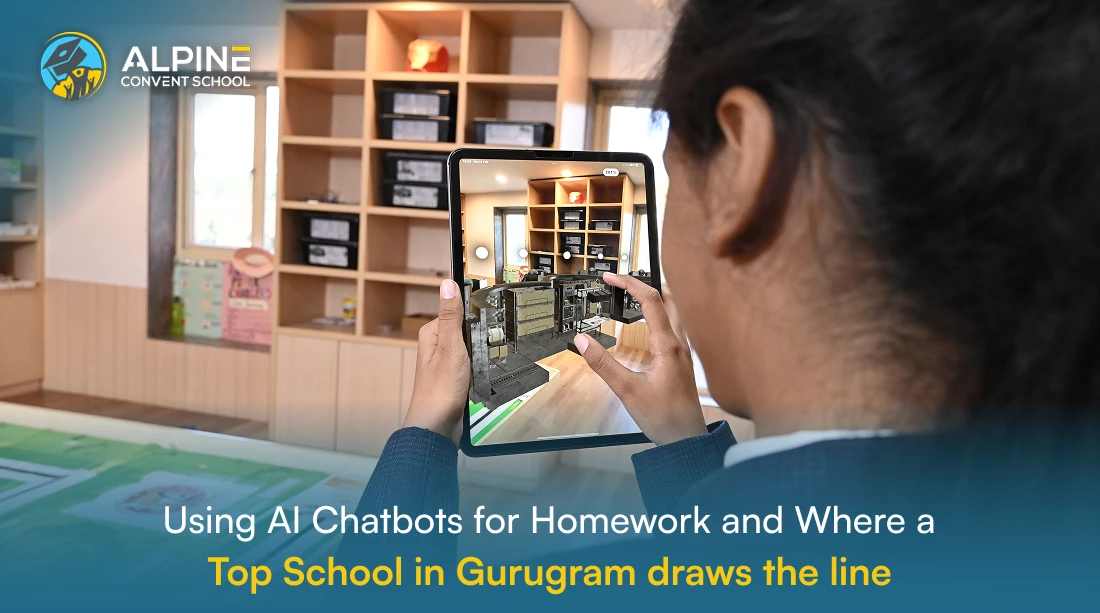
Asking a chatbot to explain photosynthesis in simpler words is learning. Asking it to write the photosynthesis answer and copying it into a notebook is not. That is where the line sits for most responsible schools: AI can help a student understand, practise and check, but it should never do the thinking or the work they hand in.
Parents shortlisting top schools in Gurgaon are now asking about this on campus visits, and with good reason. Below is a clear look at how students are using AI, what a sensible homework policy looks like, and the questions to ask before you choose a school.
AI use for schoolwork has grown considerably. Pew Research Center found that 13% of US teens had used ChatGPT for schoolwork in 2023. That figure rose to 26% in 2024. Its February 2026 research found that 54% of teens had used AI chatbots for schoolwork.
The same research highlights the risks. One in 10 teens said they do all or most of their schoolwork with AI help, while 59% believe cheating with AI has become a regular part of student life. This is US data, but the same apps sit on phones across Gurugram, Delhi and Noida.
Schools have been slow to respond. A 2023 UNESCO survey of more than 450 schools and universities found that fewer than 10% had developed institutional policies or formal guidance on generative AI. That gap is exactly why parents should ask about it.
Homework exists so children practise. When a chatbot produces the answer, the practice disappears, even if the marks look fine. Over time, that can show up in exams, where AI is not available.
There are other concerns too:
At the same time, banning AI completely is unrealistic. India is moving toward teaching it. CBSE’s curriculum on Computational Thinking and AI for Classes 3 to 8 is being introduced from the 2026-27 session. Students need to learn to use these tools well, not just avoid them.
Policies differ between schools, so treat this as a practical framework rather than a rulebook. A simple way to think about it is green, amber, and red.
A useful test for students: Could I explain this answer to my teacher without the screen in front of me? If not, AI did too much.
Rules on paper only go so far. Children follow habits more than policies, and habits come from daily practice. That is why the best schools in Gurgaon pair clear rules with teaching and assessment that make AI shortcuts less useful.
Students should learn how chatbots work, why they sometimes produce wrong or made-up answers, and how to check them against textbooks or trusted sources. Once children understand these limits, AI stops being a shortcut and becomes a genuine study tool.
Homework built around personal reflections, local examples, oral explanations, and in-class follow-ups is hard to hand off to a chatbot. It also rewards effort. A student who has to explain their answer aloud learns more than one who copies it.
A clear, written AI policy shared with families means children hear the same message at home and in class. Regular updates on what is allowed, and how misuse is handled, help parents reinforce good habits instead of guessing the rules.
These approaches can help students develop the independent thinking needed to use AI responsibly. At Alpine Convent School, experiential learning encourages students to gather knowledge, apply it, and explore new resources. Its innovation programme also connects creativity with design thinking. Parents can ask how these approaches translate into classroom activities and responsible AI use.
Even with a strong school policy, home habits matter. Try these:
When comparing the top school in Gurugram options on your list, add these questions:
The answers will tell you a lot about how carefully a school is preparing children for the years ahead.
AI is not going away. The real question is whether your child’s school teaches them to use it with honesty and judgment. A clear line, good teaching, and involved parents make the difference.
The best way to judge is to ask in person. You can schedule a campus visit at Alpine Convent School, review the admission process, or apply online. For queries, call +91 9999 700 821 or email enquiry@alpineconventschool.com. Campuses are in Sector 10, Sector 38, Sector 56, Sector 67, and Sushant Lok-1 (Sector 28), Gurugram.
Look for sudden changes in writing style, answers that sound unusually advanced, or difficulty explaining completed assignments. Ask your child to describe how they reached an answer. Regular conversations about homework can help parents identify overdependence early.
Students can use tools such as ChatGPT, Google Gemini, and Microsoft Copilot for learning support, subject explanations, and practice questions. However, parents should check age requirements, privacy settings, and school guidelines before allowing children to use these platforms.
Students should compare AI-generated answers with textbooks, classroom notes, and reliable educational websites. They should check important facts, dates, and explanations before using the information. Teachers can also guide students in identifying inaccurate or misleading AI-generated responses.
Teachers can use classroom discussions, oral assessments, handwritten exercises, and personalised assignments to evaluate understanding. Asking students to explain their answers also helps identify copied work. Regular feedback and clear AI-use policies encourage academic honesty without discouraging responsible technology use.
Parents should check whether the school has clear guidelines for AI use across different age groups. Ask about teacher training, student data protection, assessment methods, and responsible technology education. A good policy should encourage independent thinking while preparing children for emerging technologies.
24 November, 2026

16 November, 2026

17 October, 2026
16 October, 2026