20 May, 2026
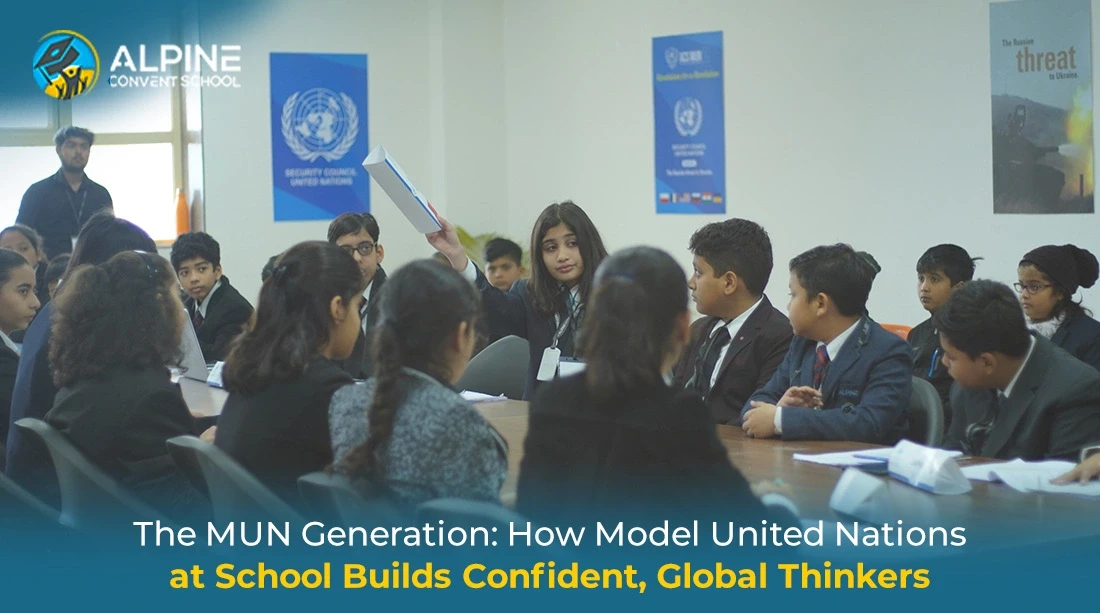
Do you wonder how some school students speak so well? They stand before large crowds. They talk about world peace, climate change, and human rights. They do not look scared at all. These young people are part of the MUN generation. Model United Nations, or MUN, is a popular activity in modern education. It is a simulation of the actual United Nations. Students act as diplomats from different countries to solve global issues. This activity is more than a regular debate. It changes how children think about the planet, which is why many parents look for the best international school in gurugram that encourages such global learning experiences.
Many parents ask how young children grasp complex global problems. The answer lies in active practice. Model UN started a long time ago. The first simulation took place at the University of Oxford in November 1921. Later, the first official Model UN event happened at Swarthmore College in April 1947. Today, thousands of students join these conferences every year.
When a child joins an event, they receive a country to represent. They must learn the history of that country. They cannot use personal opinions. This forces them to see the world from a new perspective. Finding the best school in Gurugram helps because top institutions offer dedicated training programs for these simulations. Students learn to think outside their comfort zone to study global issues.
Public speaking can be scary for young minds. How do students overcome this fear? They do it by stepping into the shoes of global leaders at Alpine Convent School. In a simulation, every student must present their country's stance. They give clear and short speeches. This practice makes them brave.
As the best international school in Gurugram, the institution provides students with regular speech practice. Children learn negotiation early. They realize that speaking well is not about using big words. It is about sharing clear ideas to solve real issues. This builds great confidence that helps them in school.
To prepare for a conference, a child must do a lot of research. They cannot just read basic news articles. They must read official documents from the United Nations Official Document System (un.org). They look at past resolutions and country agreements. This helps them build strong research habits.
This level of learning is common at a top school in Gurugram. Students do not just memorize facts for exams. They use their minds to solve real problems. This makes them independent thinkers who know how to find answers on their own. This skill is very useful for future careers.
World peace does not happen through arguments. It happens through cooperation. In MUN, students cannot win by being loud. They must form alliances with other delegates to pass resolutions. This requires excellent listening skills and empathy.
Former UN Secretary-General Ban Ki-moon spoke about this at a Global Classrooms conference. He stated, "Model UN shows us that global cooperation is possible when young minds come together". An international school in Gurugram focuses on these social skills. Students learn that teamwork is the best way to move forward. This makes them amazing leaders.
Why do students need to understand international issues today? The world is highly connected now. A problem in one country can affect people living thousands of miles away. MUN shows students how global systems work together.
The best international school in Gurugram ensures that its students look beyond local boundaries. By studying international relations, young learners become true global citizens. They learn to care about human beings from all walks of life. This expands their mindset and makes them responsible adults.
Not every school can run a successful MUN program. It requires trained mentors and excellent resources. Alpine Convent School integrates these global simulations into its core curriculum. The school gives students the right tools to shine on big stages.
This hands-on approach makes it the best international school in Gurugram. The institution does not just focus on textbook learning. It focuses on the whole personality of the child. It prepares them to be leaders who can handle real-world challenges with total ease.
How do these events shape the future career of a student? They provide skills that last a lifetime. Top universities and global employers look for students with MUN experience (imuna.org). It shows that a young person can think critically, speak well, and work in diverse teams.
If you want your child to have these skills, look for the best international school in Gurugram. The right educational environment makes a huge difference in a student's growth.
Choosing Alpine Convent School is a great first step for your child's global journey. It turns young students into confident, global thinkers who will shape a better tomorrow.
Most schools introduce Model United Nations to students in middle school, around Grade 6 or 7 (approximately 11 to 12 years old). At this stage, children have the basic reading, research, and writing skills needed to understand simple global topics. However, many schools also host junior MUN sessions with simpler rules to help younger students get comfortable with public speaking early on.
No, prior knowledge is not a requirement to start. The main goal of MUN is to teach students how to research and learn about world politics. Schools with strong global programs provide introductory training sessions, guidebooks, and mock debates. This support helps beginners learn how the United Nations works, how to research their assigned country, and how to write policy papers from scratch.
Universities and admissions officers highly value MUN experience. It demonstrates that a student has strong skills in research, critical thinking, public speaking, and leadership. Participating in these conferences shows that a student is active outside the classroom and cares about global issues. Holding leadership roles in MUN, such as being a committee chairperson or an organizer, looks especially impressive on a resume.
While preparing for a conference requires research and writing, it actually helps improve academic performance. The time management, reading comprehension, and structured writing skills that students practice for MUN directly benefit their regular school subjects, like history, English, and social studies. Most conferences take place over weekends, which minimizes disruptions to regular school days.
In a traditional debate, students are usually assigned a pro or con side of an issue, and the goal is to argue aggressively to win the debate. In contrast, MUN is a diplomatic simulation. Instead of just trying to defeat an opponent, students must act as diplomats, listen to other viewpoints, negotiate behind the scenes, and work together to write a shared resolution that solves a global problem.


15 September, 2026
09 September, 2026