22 September, 2026
Your child comes home with a test paper full of red marks. You wonder if they are just lazy, or if something deeper is going on. This worry sits in the mind of many parents across India, and it is more common than you think. When reading, spelling, or writing difficulties continue despite regular practice, parents may start looking for the best schools in Gurgaon that offer a more supportive learning environment.
However, choosing a school should involve more than academic results. Parents also need to understand how schools identify learning difficulties, provide classroom support, and communicate with families. A supportive environment can help children build confidence while receiving the right academic guidance.
Dyslexia is a learning difference. It affects how a child reads, spells, and writes words. It has nothing to do with how smart a child is.
Many bright children struggle with dyslexia. They may be great at talking, solving puzzles, or drawing. But reading a simple paragraph can feel like climbing a wall.
This is the question most parents ask. How do you tell the two apart?
A slow learner usually catches up with more practice and time. A child with dyslexia keeps struggling even after months of extra help, because the issue is in how the brain processes letters and sounds.
Here is a simple way to tell them apart:
Many signs of dyslexia show up years before a formal diagnosis. Parents often mistake them for simple carelessness. Watch for these patterns:
If you notice three or more of these signs lasting for months, it is worth getting your child screened.
Parents often feel alone in this journey, but the numbers tell a different story. A 2023 review in the Indian Journal of Psychological Medicine looked at over 8,000 children and found the overall pooled prevalence of specific learning disabilities in India was 8 percent (pmc.ncbi.nlm.nih.gov). That means in a class of 40 students, three or four may have some form of learning difficulty.
Government data adds more detail. According to UDISE+ figures for 2024-25, close to 12 percent of children with special needs enrolled in Indian schools have specific learning disabilities, which can include dyslexia. This shows the issue is far from rare.
Dr. Brett Miller of the National Institute of Child Health and Human Development has noted that early, clear reading instruction that links written words to their sounds is critical for children with dyslexia. This kind of targeted teaching, not just extra homework, makes the real difference.
Many parents do not know that dyslexic children have legal rights in Indian schools. The Rights of Persons with Disabilities Act, 2016 recognises specific learning disabilities, including dyslexia, as a condition needing support.
CBSE has also issued clear rules for board exams. Students with a valid certificate can get:
NCERT has also rolled out PRASHAST 2.0, a screening app under the Samagra Shiksha scheme, to help teachers spot such children early.
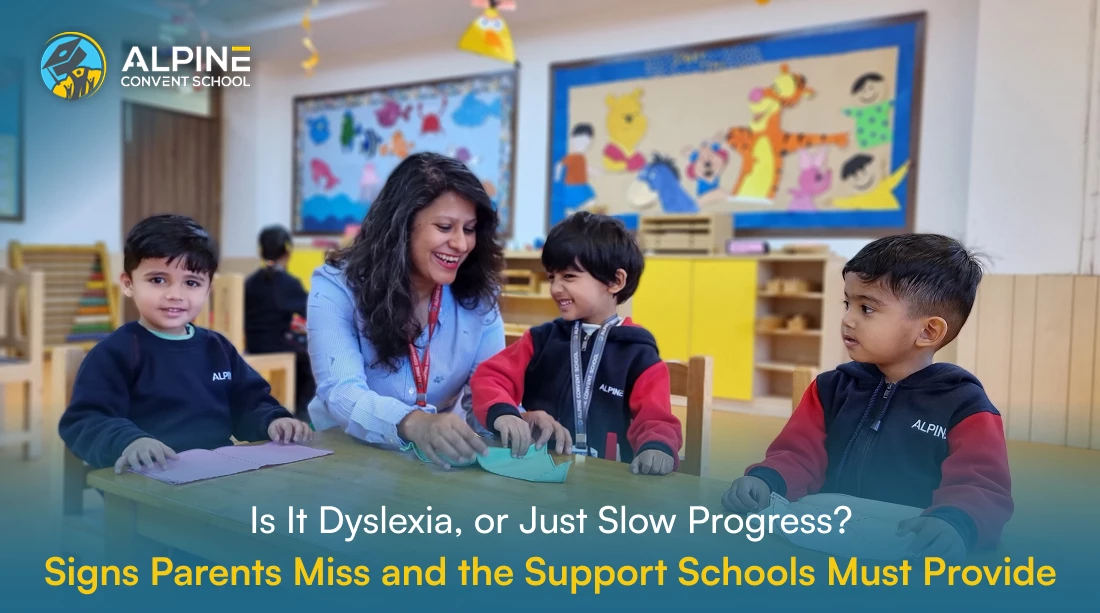
A school is often the first place where these signs get noticed, since teachers see children read and write every single day. This is why the support a school offers matters so much.
Good schools should offer:
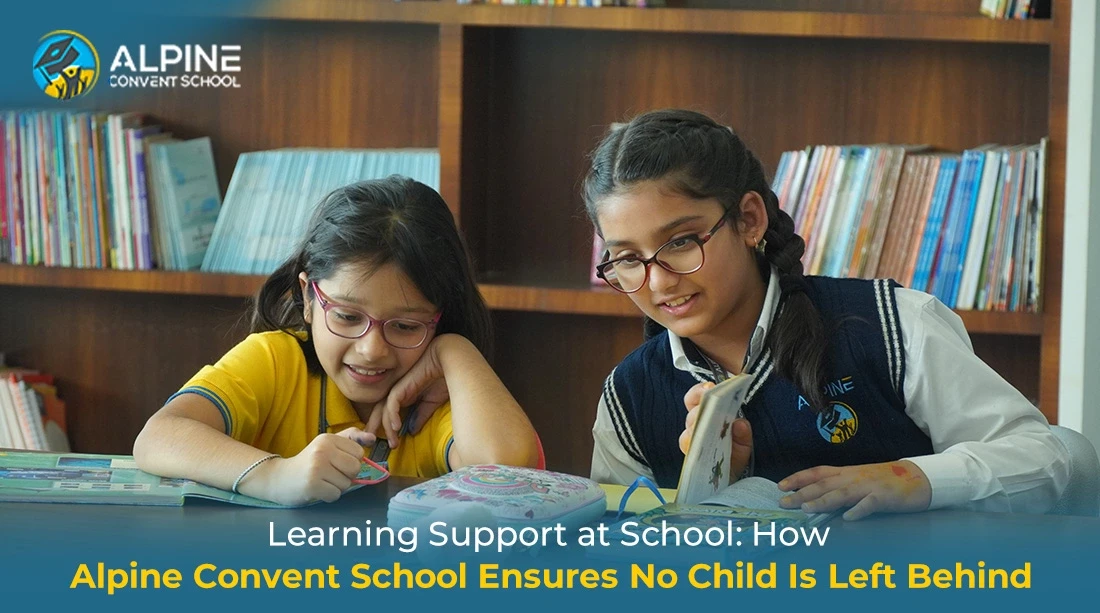
At Alpine Convent School, personalized and activity-based learning is part of the school's stated teaching approach across its Gurugram campuses. As a CBSE-affiliated school with a focus on personalized learning, we provide remedial support, individual mentoring, and regular parent-teacher communication to help students who face academic challenges.
Parents comparing the top schools in Gurgaon should also look at how each school supports children who need additional academic guidance. A supportive classroom can help students learn at their own pace while building confidence.
You do not need to wait for the school to raise a concern. Parents can take small steps at home too.
The right school environment can change a struggling child's entire school life. Parents often compare schools on exactly this point: how well they handle children who need extra academic support.
When visiting schools, parents should ask how the school identifies reading difficulties, what classroom support it provides, and how it handles applicable CBSE accommodations. Families looking for the best school in Gurugram should also consider teacher support, communication, and personalised learning practices. A school with an open, supportive culture is often a better long-term choice than one with only exam scores to show.
This is one reason many families continue to explore schools in Gurugram that pair strong academics with real personal attention. Alpine Convent School follows a personalised, activity-based approach that supports students through individual attention and regular parent-teacher communication.


15 September, 2026
09 September, 2026