09 July, 2026
Have you ever wondered how a simple school lunch affects your child's grades and mood? Many parents pack a quick lunchbox every single morning. They assume it is enough to keep their child full during the day. However, at the best school in Gurugram, modern school dining is changing very fast. What children eat during the day shapes their brains, bodies, and social skills. A new way of school dining is gaining popularity around the world. It is called the refectory model. This model changes the way students view food, health, and community.
The word refectory comes from an old Latin word. This word means to restore or to remake. In the past, a refectory was a large shared dining hall. Monks and old university students used these halls to eat together in shared harmony. Today, modern schools are bringing this great concept back with a helpful twist.
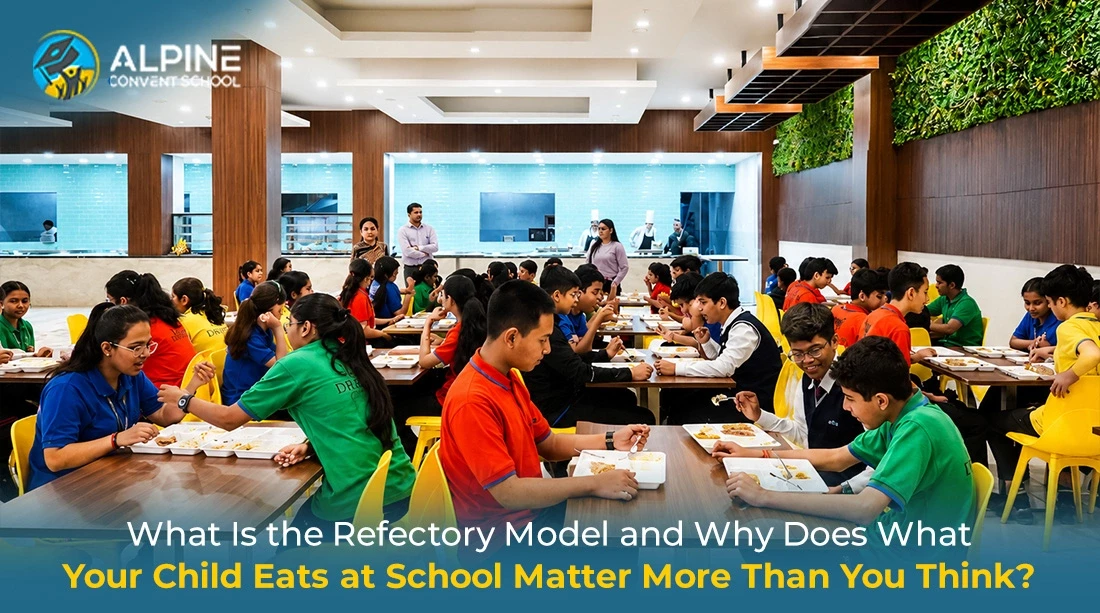
The modern refectory model is not just a standard school cafeteria. In a regular cafeteria, children wait in a fast line. They grab their food on a plastic tray. Then they sit down quickly and rush to finish their meal. The refectory model is completely different. It focuses on a sit-down, family-style meal. Students sit at long tables with their peers and teachers. They eat the same freshly prepared, healthy dishes.
This style of dining turns lunch into a class of its own. Children learn how to share food politely. They practice good table manners every day. They talk to each other without screens, television, or phones. Alpine Convent School believes in this approach to child growth. The model treats food as a vital tool for learning and bonding.
Is a school lunch just about stopping hunger? The short answer is no. Food acts as fuel for the growing brain. A child's brain uses a massive amount of energy during the school day. If that fuel is poor, their learning suffers heavily.
Many families do not know how deep the link is between food and grades. Good nutrition helps children stay awake and active. It helps them focus on complex classroom tasks. According to data from the School Nutrition Association, nutrition has a huge impact on test scores. Their reports show that children who eat a healthy breakfast at school get 17.5% higher scores on standardized math tests. They also attend more days of school each year.
When a school provides hot, fresh meals, every child gets the same high-quality nutrients. The best school in Gurugram provides such nutritious meals to give every student an equal chance to succeed.
What happens inside the classroom when a child eats processed foods? The brain suffers from quick sugar spikes and sudden crashes. This makes children restless, tired, and irritable.
A major study featured on The Lunch Box website looked into this exact issue. Researchers found that schools serving healthier lunches saw a clear rise in student test scores. In fact, the boost in learning was quite large. It was equal to giving students an extra four weeks of school time each year. This shows that food quality alters how fast a child learns new concepts. This is why the top school in Gurugram focuses deeply on child nutrition. Fresh fruits, whole grains, and lean proteins help the brain build new paths.
The refectory system offers many advantages over the traditional lunchbox method. Here are the main benefits that help children grow every day:
Experts agree that school dining spaces must change for the better. Nutrition is not just a personal choice. It is a part of basic education.
Dr. Marion Nestle is a well-known professor of nutrition emerita at New York University. She points out that school meals should be a core part of the school day. She believes these meals teach children how to eat well for the rest of their lives.
Schools must take this responsibility seriously. Children spend most of their active hours at school. The food they eat there forms their lifelong health habits. Alpine Convent School aligns its menu with these expert guidelines to protect student health.
Can the right food reduce classroom disruptions during the afternoon? Yes, it can. Bad behavior is often just a sign of poor nutrition and hunger.
The Food Research & Action Center published clear findings on this topic. They found that healthy school meals lower the number of visits students make to the school nurse. Even better, good food reduces behavioral problems like anxiety and depression.
When children eat regular, balanced meals, their mood stays stable. They do not feel sudden bursts of anger or fatigue. The best school in Gurgaon ensures that lunchtime is a peaceful and organized experience. This calm environment carries over into the afternoon classes. Teachers notice that students are more cooperative and ready to listen.
Parents often ask how they can support this model at home. The key is consistency. You should try to recreate the shared dining experience during dinner time. Sit together at a table. Turn off the television and put away all phones. Talk about your day while sharing the same meal.
As the best school in Gurugram, we know that good food fuels great minds. We design our meals with the help of child experts. We ensure the kitchen follows strict hygiene rules.
At Alpine Convent School, the dining hall is a place of joy. It is a space where children learn health and community hand in hand.
What a child eats at school alters their entire future. It affects their grades, health, and social life. The refectory model provides a smart solution to modern lifestyle challenges. It replaces lonely lunches with a warm, shared community experience. Choosing the best school in Gurugram means looking at how they feed your child's body and mind. Invest in a school that values healthy food. Your child will thank you for it in the future.
The refectory model is a family-style dining system where students and teachers sit together at long tables to share the same freshly prepared meal. Unlike standard cafeterias, it focuses on community, slow dining, and table manners rather than quick, isolated eating.
Nutritious food provides stable energy for the brain. Studies show that balanced meals prevent blood sugar crashes, which helps children stay focused during complex tasks. Schools serving healthy lunches see a clear rise in student test scores and overall classroom attention spans.
Yes. The model uses positive peer pressure to encourage healthy choices. When children observe their friends and teachers eating green vegetables, lentils, and fresh fruits without fuss, they become much more willing to try those foods and drop their picky habits.
A lunchbox isolates a child's eating habits and can lead to unnoticed food waste. Family-style dining teaches students social skills, sharing, and empathy. It also ensures every child receives the same high-quality nutrition, which removes social barriers and promotes equality.
Processed foods lead to quick sugar spikes followed by sudden crashes, making children tired and restless. Balanced meals maintain steady energy levels. This stability reduces behavioral issues like anxiety and sudden irritability, leading to a much calmer and more cooperative afternoon learning environment.



08 August, 2026