05 June, 2026
School life is safe and structured. Teachers guide you every day. Parents help with your daily choices. But what happens after your final school exams? Why do some top students find life after school so hard? The shift to college or a career brings big changes. Academic knowledge is great, but it is not enough. Young adults need practical skills to survive in the real world.
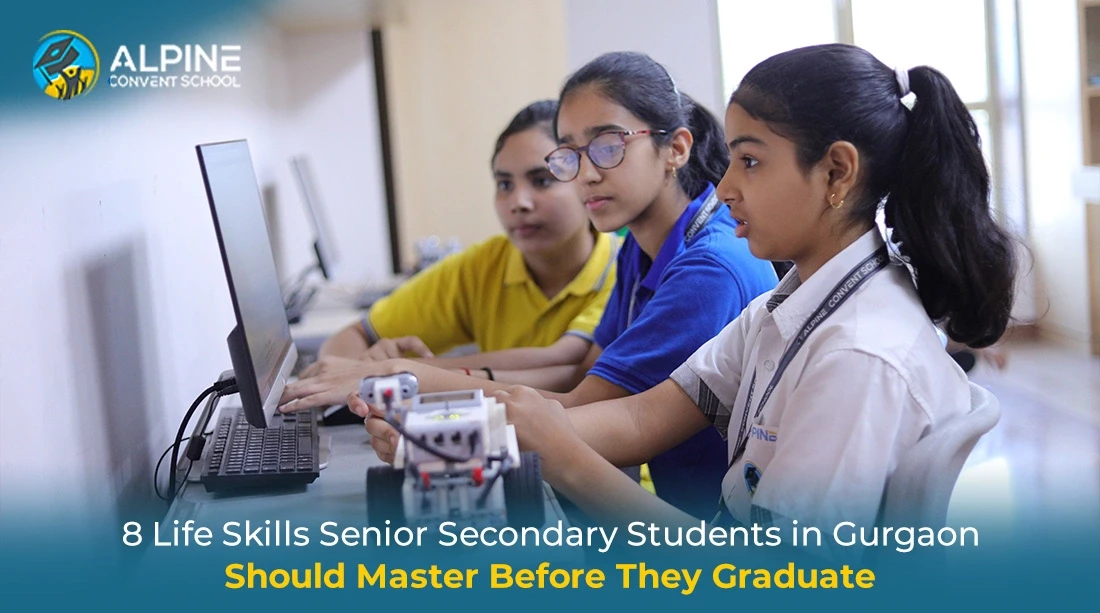
Growing up in a fast city like Gurgaon requires extra preparation. Students must learn to manage life on their own. Leading institutions like Alpine Convent School understand this need. Education must go beyond textbooks. True success comes when young adults can handle real challenges. Here are eight life skills every senior student should master before graduation.
Senior secondary students often get a fixed allowance. But do they know how to handle a monthly budget? A global report by the Organisation for Economic Co-operation and Development shows that nearly 18 percent of teenage students lack basic financial literacy skills. How can young adults handle cash without stress? They must learn how money works before moving out.
Learning to save a small portion of money each month builds security. Modern schools in Gurgaon now highlight financial education to make students smart consumers.
In school, a loud bell tells you when to move. Teachers check your tasks daily. College life does not work that way. No one will wake you up for an early morning class. Students must take charge of their own schedules to avoid failure.
Good time management reduces daily anxiety. The top schools in Gurgaon focus on time management to build independent young leaders.
Living away from home means no more ready meals. Fast food is an easy choice, but it hurts your health and wallet. Cooking is a vital skill for survival. It keeps you fit and saves a lot of money.
Eating fresh meals boosts your brain power during exams. Prominent educators at good schools in Gurgaon always encourage kids to practice basic home tasks.
Life after school brings high pressure and new social settings. Academic failure or career rejections can happen. A study published by the National Academy of Sciences states that emotional stability and determination lead to better social well-being and less loneliness. Students must learn how to handle their feelings.
Mental health matters just as much as physical health. Hence, top schools in Gurgaon create safe spaces for students to build mental strength.
Life does not always follow a textbook. Unexpected issues pop up every day. Students must look at facts and make smart decisions. John Dewey, a famous educator, once said that education is not preparation for life, but education is life itself. Young adults must learn how to face these daily issues.
A good problem solver can handle any crisis at work or at home. This focus on logic is why the best schools in Gurgaon train students to solve open-ended problems.
How do you pitch an idea or ask for a job? Good grades alone will not open doors. Young adults must speak clearly and listen well. Building a strong professional network starts right after school.
Sharing ideas clearly helps you make great friends and land jobs. At Alpine Convent School, students practice public speaking to gain high self-confidence.
Imagine a leaking tap or a flat tire late at night. You cannot always wait for a mechanic or a plumber. Knowing how to fix small things saves time and stress. It builds self-reliance.
These small tasks might seem minor, but they make you fully independent. The top schools in Gurgaon believe that manual skills are just as important as mental skills.
Today, students spend hours online. They use digital tools for study and entertainment. But the digital world has many risks, like scams and identity theft. Data security is now a major life skill.
Being safe online keeps your private life secure. The top schools in Gurgaon run safety workshops to teach smart internet habits.
Why do we focus so much on these skills? Textbooks give you facts, but life skills give you tools. Young adults who master these habits feel less anxious about the future. They handle college transitions with absolute ease.
Our mission at Alpine Convent School is to shape well-rounded individuals. We prepare our students for every stage of life. Master these eight skills before you step out of school. You will find that the real world is full of amazing opportunities.
While school textbooks teach academic subjects, life skills teach practical survival. Mastering skills like basic budgeting, time management, and emotional resilience helps students handle the sudden independence of college life. It reduces their daily stress and prevents them from feeling overwhelmed by real-world responsibilities.
Students can start by managing a fixed monthly allowance for all their personal expenses. Parents can guide them to open a personal bank account, track daily spending using digital apps, and save a specific percentage of their money. This hands-on practice builds smart money habits before they move out for higher education.
The best approach is to blend life skills into your daily routine rather than treating them as extra subjects. For instance, students can practice time management by planning their weekly study schedules, or they can learn basic cooking by helping prepare family meals on weekends. Small, consistent steps make learning these habits natural and stress-free.
Leading institutions go beyond traditional classroom teaching by hosting specialized workshops, interactive seminars, and hands-on activities. They organize public speaking events to boost confidence, cyber safety sessions for digital security, and career counseling programs to help students develop strong critical thinking and emotional intelligence.
The senior secondary years (grades 11 and 12) are the ideal time to focus intensely on self-reliance, as graduation is just around the corner. However, learning basic household tasks, time discipline, and personal safety can start much earlier. Gradually taking on small responsibilities ensures that a student is fully independent by the time they finish school.
15 September, 2026
09 September, 2026