23 December, 2025
The world is changing fast. Today, children need more than just good grades to succeed. They need the ability to think clearly and solve problems. This skill is called critical thinking. It helps students look at a situation, understand it, and find the best way forward. At our institution, we focus on building these skills every single day. We want our students to be ready for the real world.
Critical thinking is not about being smart. It is about how you use your brain. It means asking questions instead of just accepting answers. It means looking at facts before making a choice. When students think critically, they do not just memorize dates or formulas. They understand why those things matter. This habit helps them in school and in their future jobs.
Life does not come with a textbook. Real-world problems are often messy. They do not have one simple answer. By facing these challenges early, students build confidence. They learn that it is okay to fail and try again. This process makes them resilient. It prepares them to handle the pressure of adult life.
Teachers play a huge role in this journey. Instead of giving long lectures, they can use better methods. Here are some ways we encourage deep thinking:
Curiosity is the engine of critical thinking. A curious child wants to know how things work. According to a study by the University of California, curiosity makes the brain more receptive to learning. We nurture this by creating a safe space for questions. No question is too small or too silly. When a child feels safe to ask, they start to explore. This exploration leads to a deeper understanding.
In a busy city, life moves at a high speed. A school in Gurugram must prepare kids for this pace. Students here often face a lot of competition. If they only focus on books, they might struggle later. By teaching them to solve problems, a school in Gurugram gives them a special edge. They learn to stay calm when things get hard. This is a vital skill for the modern workforce.
Teamwork is a big part of critical thinking. When kids work together, they see different points of view. This is very important in the best school in Gurgaon. Students learn that their way is not the only way. They share ideas and build something better together. This prepares them for global careers where teamwork is a must.
Technology is everywhere. But using a tablet is not the same as thinking. We teach students to use tools to find data. Then, we ask them to check if that data is true. This is called media literacy. It is a key part of the curriculum at Alpine Convent School. In a world of fake news, knowing what to trust is a superpower.
Research shows that the brain is like a muscle. The more you use it to solve puzzles, the stronger it gets.
The CBSE board has updated its style of teaching. It now focuses more on competency-based learning. As a CBSE school in Gurgaon, we follow these new rules closely. We move away from rote learning. We focus on how students apply what they know. This shift ensures that our students are not just exam-ready but life-ready.
We want our students to be leaders. To lead, one must be able to decide. We give students small choices every day. They might choose their project topic or how to present their work. This builds a sense of ownership. At Alpine Convent School, we believe that small choices lead to big confidence.
Thinking about your own thoughts is called metacognition. It sounds hard, but it is simple. It means asking, "Why did I think that?" or "Could I have done this better?" We encourage students to write journals. This helps them track their growth. It turns every experience into a lesson.
John Dewey, a famous educator, once said, "Education is not preparation for life; education is life itself." This quote reminds us that school should mirror the real world. We should not wait for graduation to start thinking about real issues. We should start now.
Many people think logic is only for numbers. That is not true. You need critical thinking in art to express a feeling. You need it in literature to understand a character. You even need it in sports to plan a move. A top school in Gurugram integrates this skill into every subject. It makes every lesson more exciting.
Critical thinking is not just about logic. It is also about empathy. To solve a problem for people, you must understand people. We teach our students to think about how their actions affect others. This makes them kind and thoughtful leaders. It is a core value at Alpine Convent School.
Education has changed a lot in twenty years. Old schools focused on silence and obedience. Modern schools in Gurgaon focus on voice and participation. We want students to speak up. We want them to challenge ideas respectfully. This shift creates a much more lively and effective learning environment.
Critical thinking takes time. You cannot rush a good idea. We teach students to slow down. In a world of instant results, patience is rare. We show them that thinking deeply is worth the wait. This helps them avoid simple mistakes.
The world is more connected than ever. Our students will likely work with people from many countries. To do this, they need to understand different cultures. By thinking critically about global issues, they become better citizens. They learn to care about the planet and its people.
Choosing a school is a big task for parents. You want a place that looks at the whole child. Alpine Convent School, a school in Gurugram that values thinking over grades, is a great choice. It sets a strong foundation for a happy and successful life and gives your child the tools to build their own future.
Teaching kids to think is the best gift we can give. At Alpine Convent School, we believe this approach empowers children to face any challenge. Whether it is a hard exam or a tough job, they are prepared with confidence and clarity. We are proud to be part of this important journey. Our focus remains on creating bright, thoughtful, and capable young minds for the world of tomorrow.
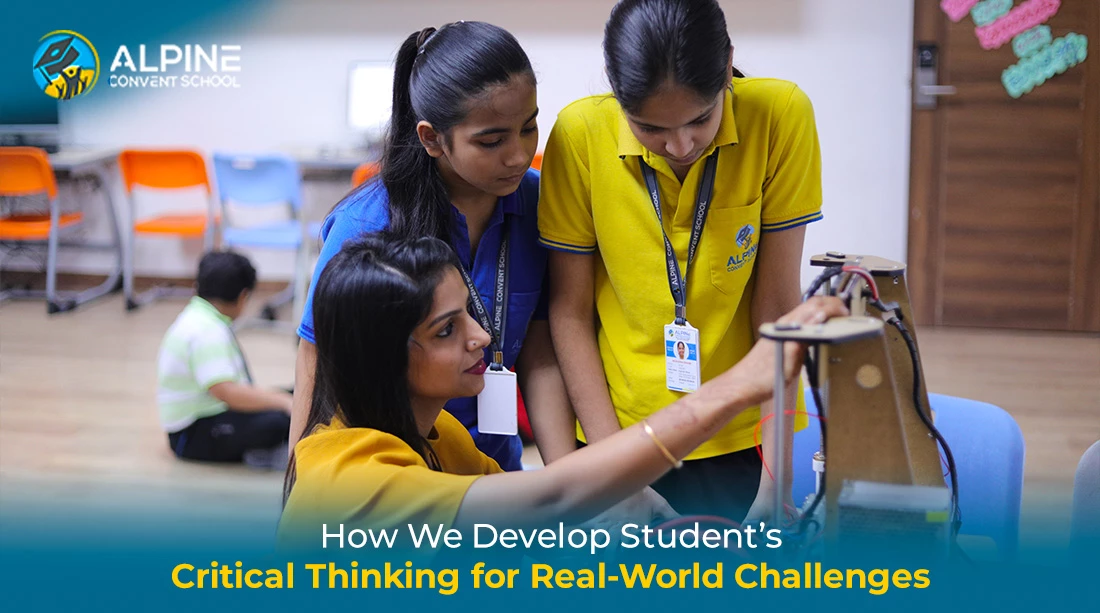
In a school in Gurugram, critical thinking is seen when students lead the conversation. Instead of just writing notes from a board, students might analyze a news story, solve a logic puzzle as a team, or conduct a science experiment to see what happens when they change one variable. It looks like a busy, active room where questions are more important than quick answers.
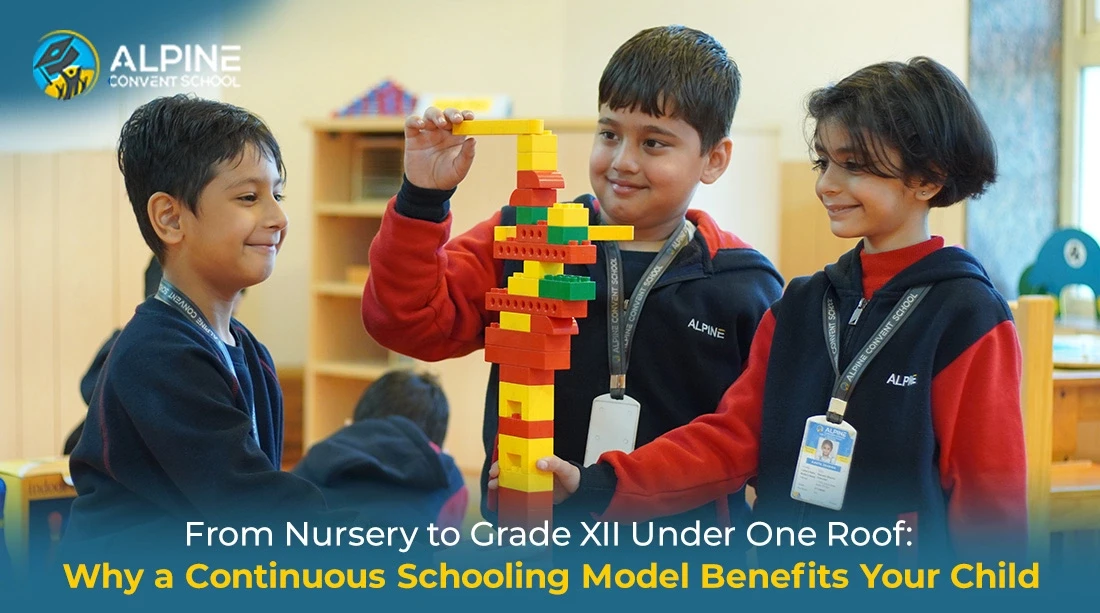
Not at all. At Alpine Convent School, we start building these habits in early childhood. For young children, it might be as simple as asking them to predict what happens next in a story or asking them to build a bridge out of blocks that can hold a certain weight. The earlier a child starts asking "why," the stronger their thinking becomes.
The CBSE school in Gurgaon curriculum has changed to include more "case-based" questions. These questions don't ask for a memorized definition; they ask students to apply a concept to a real situation. By practicing critical thinking every day, students find these new exam formats much easier because they are used to analyzing problems rather than just repeating facts.
Yes, and it is very helpful! Parents can encourage this by asking for their child's opinion on daily choices, like planning a weekend trip or managing a small budget for a toy. When a child asks a question, instead of giving the answer right away, try saying, "That is a great question! How do you think we could find the answer?" This builds the "problem-solving" muscle.
The best school in Gurgaon focuses on this because many jobs of the future do not exist yet. While computers can handle data and memorization, they cannot easily copy human logic and creativity. A child who can think critically can adapt to any job, solve unexpected problems, and lead teams. This makes them "future-proof" in a world that is always changing.


15 September, 2026
09 September, 2026